For contractors who install screw foundations only a few times a year, owning specialized equipment may be unnecessary. Rental, subcontracting or using an excavator with a suitable attachment can cover occasional projects without creating storage and maintenance obligations. The calculation changes when helical pile installation becomes a regular part of the workload. Repeated rental charges, transport costs and scheduling limits can gradually make ownership more attractive.
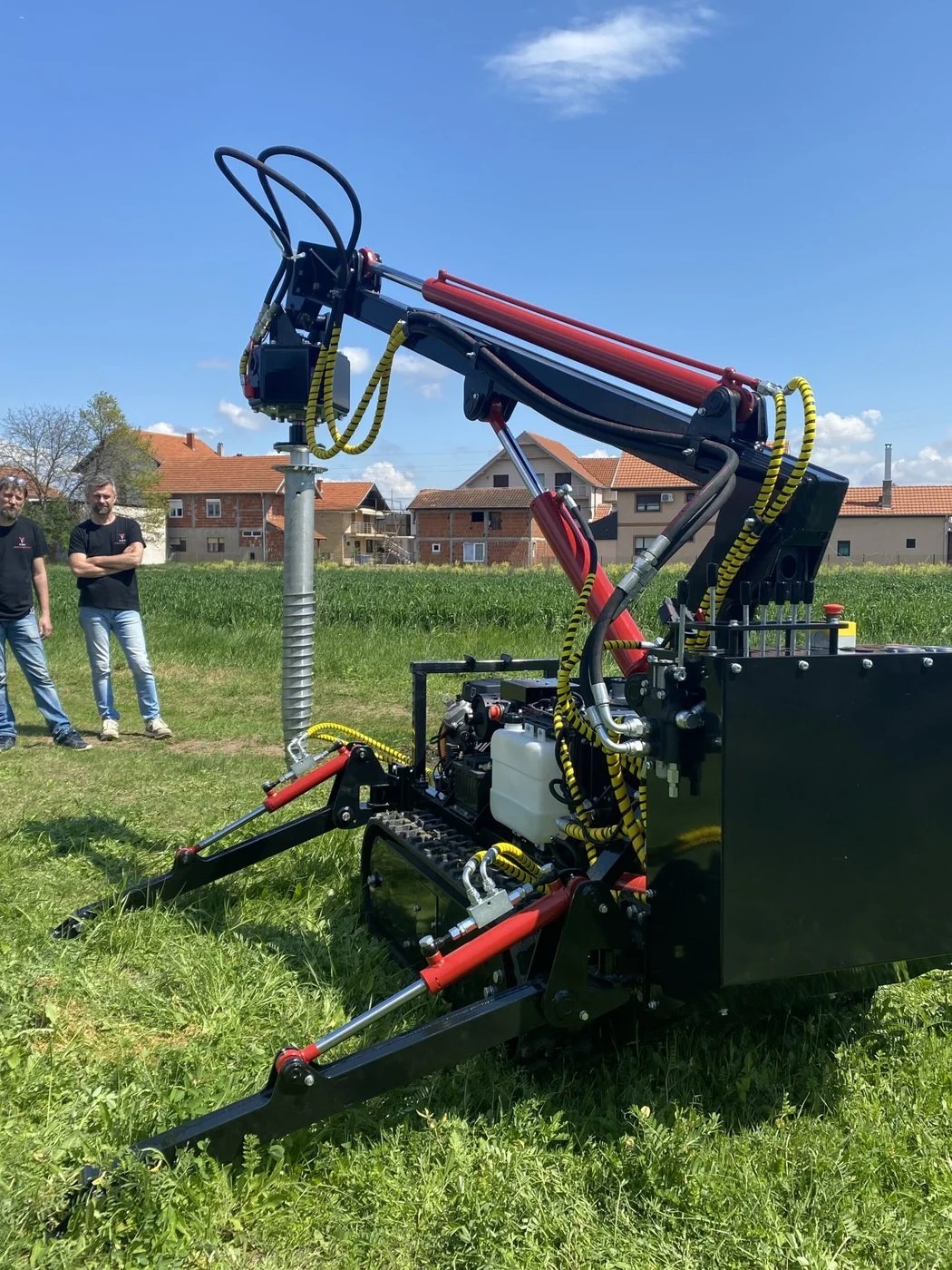
A contractor considering its own machine should look beyond the purchase price. Equipment affects how quickly projects can be scheduled, how much control the company has over mobilization and how many smaller jobs remain commercially viable. A dedicated machine such as the one shown at https://iron-mechanics.com/product/helical-pile-machine/ can become part of the contractor’s normal operating system rather than a resource that has to be arranged separately for every project. That shift can influence pricing, staffing and the number of installations the company can complete within a season.
Start With Annual Utilization
The most important question is how often the machine will actually work. Specialized equipment earns its value through use, not through ownership alone. A machine that spends most of the year in storage still requires capital, maintenance and space, while producing little revenue.
Contractors should review their previous projects rather than rely only on expected future growth. The number of piles installed, the number of working days that required rented equipment and the cost of mobilization provide a useful starting point. If the company already spends a significant amount on external installation resources, ownership can be evaluated against those recurring expenses.
Future workload still matters, but it should be based on realistic sales expectations. Buying equipment because a company might enter a new market carries more risk than purchasing it for an established stream of work. The strongest business case usually appears when current projects already justify frequent machine use.
Seasonality should be included as well. A machine may be busy for eight months and largely idle for the rest of the year. That does not automatically make ownership unattractive, but the active months need to generate enough work to support the full annual cost.
Compare Ownership With the Real Cost of Rental
Rental prices are easy to see because they appear on invoices. Other costs are less obvious. Delivery charges, minimum rental periods, operator fees and delays can all increase the real expense of relying on external equipment. A short installation may become disproportionately expensive if the machine must be booked for an entire day.
Ownership creates a different cost structure. Instead of paying separately for every project, the contractor carries fixed and operating costs across many jobs. These may include financing, insurance, storage, maintenance, fuel and transport. The question is whether the machine can be used often enough to reduce the average cost per project.
A useful comparison should include:
- annual rental and subcontracting expenses;
- transport and delivery charges;
- operator costs where applicable;
- expected maintenance and service spending;
- financing or depreciation;
- storage and insurance;
- estimated annual machine utilization.
This approach gives a more realistic picture than comparing a purchase price with one day of rental. It also shows how sensitive the decision is to workload. If utilization drops significantly, ownership can quickly become less attractive.
Match the Machine to Typical Projects
A contractor should avoid buying equipment solely for the largest project it expects to encounter. A high-capacity machine may appear to provide useful flexibility, but extra torque and structural strength usually increase weight, dimensions and transport requirements. If most projects involve moderate pile sizes, that additional capacity may remain unused.
The better approach is to define the normal operating range. Typical pile diameter, length, installation depth and soil conditions should all be considered. The selected machine should handle these projects comfortably while retaining some reserve for harder ground or occasional larger foundations.
Site access belongs in the same analysis. A technically powerful machine has limited value if it cannot pass through the gates, paths or residential access routes common to the contractor’s work. Dimensions, track width, turning ability and boom reach can be just as important as torque.
Contractors should also consider how many different adapters and attachments will be needed. A machine that can work with several commonly used pile systems may provide more flexibility, but compatibility should be confirmed before purchase rather than assumed.
Transport Can Decide Whether Small Jobs Pay
Transport often determines the economics of short projects. A large machine that requires specialized haulage can still be efficient on major construction sites, where mobilization cost is spread across hundreds of piles. The same transport arrangement may be difficult to justify for a small deck or modular building.
A compact self-propelled machine can reduce this problem if it fits the contractor’s existing transport setup. The crew may be able to load the equipment, move it to the project and begin installation without coordinating a separate heavy transport provider. This can shorten the time between jobs and simplify scheduling.
Local regulations must still be considered. Trailer limits, towing capacity, axle weights and licensing requirements vary between jurisdictions. Contractors should verify the complete transport combination rather than looking only at machine weight.
Loading method matters as well. Equipment that takes a long time to prepare or requires additional lifting machinery can increase non-productive time. Fast and repeatable loading becomes increasingly valuable when the machine moves between several sites each week.
Maintenance Becomes Part of Production
Once a company owns the machine, reliability becomes its own responsibility. This can be an advantage because the contractor controls service intervals and knows how the equipment has been used. It can also become a problem if maintenance is treated as something to address only after a failure.
Hydraulic systems, hoses, fittings, drive components and the undercarriage all require inspection. Repeated high-torque work places substantial loads on the machine, especially when ground conditions are difficult. Preventive maintenance helps identify wear before it causes downtime on a project.
Spare-parts availability deserves attention before purchase. A machine can be mechanically sound yet difficult to support if replacement components take weeks to arrive. Contractors who rely on one primary installation unit should understand which parts are standard, which are proprietary and how quickly critical components can be sourced.
Service access also influences operating cost. Components that are easy to reach can be inspected and replaced more quickly. If routine work requires extensive disassembly, even minor maintenance can remove the machine from service for longer than expected.
Ownership Changes Scheduling
One of the less obvious benefits of ownership is control over timing. A contractor with its own machine does not need to align every project with a rental calendar. If a client delays a site by one day, the entire equipment booking does not necessarily need to be rearranged.
This flexibility can be particularly valuable for small projects. A company may be able to install ten piles in the morning and move to another site later the same day. Rental arrangements often make this type of scheduling less efficient because delivery and collection times are outside the contractor’s control.
Ownership can also reduce the risk of losing work during busy periods. When rental fleets are heavily booked, contractors may need to delay projects or accept less suitable equipment. Having a machine available internally protects the schedule from some of these external constraints.
The commercial value is not only in completing more piles per hour. It is also in being able to accept projects with shorter notice and organize them around the company’s own crews.
Calculate Payback Conservatively
Equipment investment should be based on realistic assumptions. Contractors often make the mistake of calculating payback using perfect utilization, full schedules and no unexpected costs. Real operations include weather delays, maintenance, seasonal demand and periods when the machine is not required.
A more cautious calculation can follow several steps:
- Estimate how many projects will realistically use the machine each year.
- Calculate current rental, subcontracting and mobilization costs for those projects.
- Add annual ownership costs, including maintenance, insurance and storage.
- Estimate transport and fuel expenses under the new operating model.
- Allow for downtime and lower-than-expected utilization.
- Compare total annual savings with the capital invested.
- Recalculate the result using a weaker workload scenario.
This second scenario is important. If ownership only makes sense when every month is fully booked, the investment may be too dependent on optimistic assumptions. A stronger business case remains reasonable even if project volume falls below expectations.
Contractors should also consider the machine’s residual value. Equipment with regular service history and understandable specifications may retain part of its value if the company later changes direction. That does not eliminate investment risk, but it should be included in the financial picture.
Questions to Ask Before Buying
Technical specifications are only one part of the purchase decision. Contractors should also understand how the equipment will be supported after delivery. Warranty terms, service procedures, spare parts and operator information can affect the machine’s usefulness over several years.
It is worth asking how the machine performs under sustained installation work rather than only at its peak specification. Contractors should also clarify service intervals, recommended hydraulic fluids, replacement parts and any operating limits related to temperature or terrain.
Training can be valuable even for experienced crews. A new machine may have different boom geometry, controls or maintenance requirements from equipment the company has used before. Correct operation from the start can reduce unnecessary wear and improve installation consistency.
Buying a helical pile machine makes the most sense when the contractor already has enough work to use it regularly and when the equipment fits the company’s typical sites. Ownership can reduce dependence on rentals, improve scheduling and make smaller installations more practical. Its value comes from consistent utilization and operational control, not simply from having a specialized machine available.