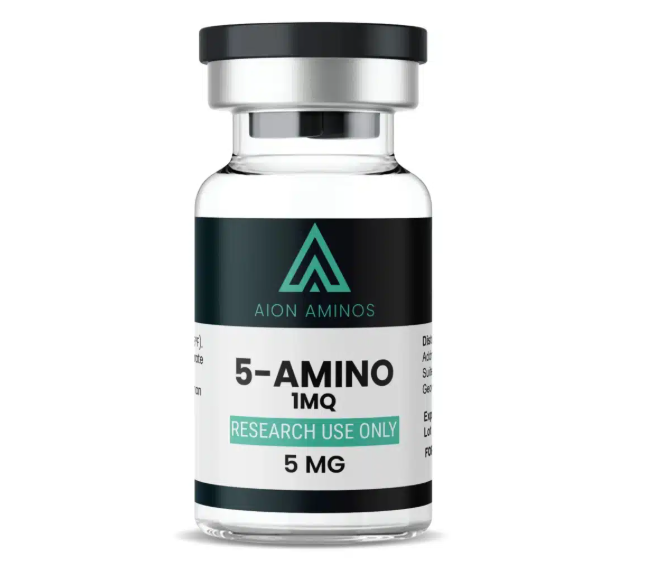
5 Amino-1MQ has become a popular name in metabolic research circles, largely because of its role as a small molecule inhibitor of an enzyme called NNMT, which researchers have linked to fat storage and metabolic regulation in animal models. Despite frequently being marketed alongside peptides, it’s worth noting this compound is actually a small organic molecule rather than a peptide in the strict chemical sense, since peptides are chains of amino acids while this molecule is not.
The core study behind most of the public interest in this compound was published in 2018 in the journal Biochemical Pharmacology, where researchers tested the molecule in mice on a high-fat diet and reported reductions in fat mass without any accompanying reduction in food intake. That foundational preclinical pharmacology study finding has since been cited extensively in follow up animal research, though it’s worth being clear that the original work was conducted entirely in mice, using specific laboratory administration methods, not in any human trial setting.
As of now, there simply aren’t any published human trials examining this compound’s safety or effectiveness in people. That’s a meaningful gap, since preclinical results in rodents frequently fail to replicate once researchers move into human studies, particularly in metabolic research where a promising mouse finding has historically had a mixed track record of translating into comparable human outcomes.
Regulatory status is another piece of context that’s easy to overlook amid the enthusiasm around a new compound. Products like this are typically sold labeled for laboratory research use only, and according to the official compounded drug risk guidance published by federal regulators, substances that haven’t gone through premarket safety and effectiveness review carry real, documented risks whenever they’re used outside a properly controlled research or clinical setting.
For researchers actually working with this compound in a laboratory context, understanding its precise mechanism, that it works by inhibiting NNMT and altering cellular NAD⁺ and SAM levels rather than through any appetite-suppressing or stimulant pathway, is essential background before designing any experiment involving it.
Follow up studies have expanded on that original 2018 work in interesting directions, including research into aged skeletal muscle and satellite cell activity, along with combination studies pairing NNMT inhibition with dietary changes in obese mouse models. Each of these follow-up papers adds useful mechanistic detail, but every single one of them was still conducted in animals, which means the overall evidence picture, while growing, remains confined to preclinical models rather than anything resembling a human clinical trial.
It’s also worth noting that this compound is frequently marketed using language borrowed from the peptide world even though, chemically, it belongs to a different category of small molecule entirely. That labeling confusion matters for researchers trying to compare it fairly against actual peptide compounds, since its size, structure, and oral bioavailability profile behave quite differently from a true amino acid chain, which can affect how findings from one category get generalized to the other in casual discussion.
The interest in this compound within the research community is genuine, and the underlying enzyme biology is scientifically interesting, but the evidence base remains firmly at the animal study stage. Anyone reading about it should keep that distinction between preclinical promise and established human outcomes clearly in mind and should treat any confident claims about human results with real skepticism until that clinical research actually exists.
Understanding the target enzyme itself is also useful context, since NNMT has drawn attention well beyond metabolic research, with separate lines of study examining its role in certain cancers and other disease processes entirely unrelated to body weight. That broader scientific interest in the enzyme lends some credibility to the underlying biology, even while the specific compound derived from it still awaits the kind of human research needed to say anything definitive about its effects in people.