Gravel might look like a simple pile of crushed stone, but its size, shape, and composition determine how well it performs. The material that allows rainwater to move through a drainage trench may not hold up as well under daily vehicle traffic. Knowing these differences helps property owners choose suitable gravel for sale without spending money on material that cannot do the intended job.
What Makes Drainage Gravel Different From Driveway Gravel?
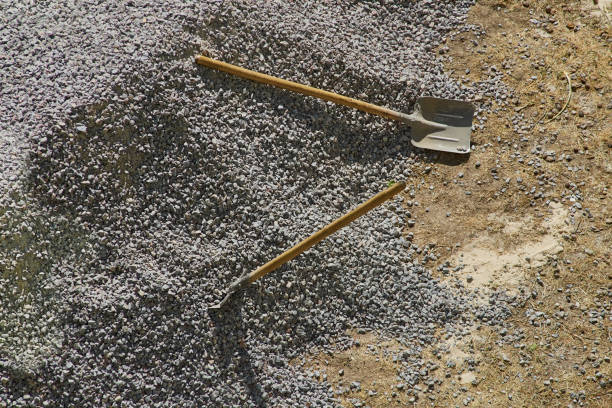
Drainage gravel allows water to pass through the open spaces between individual stones. Suppliers typically provide clean, washed, or screened aggregates with limited fine particles for this purpose. These gaps allow water to move toward a perforated pipe, collection point, or drainage outlet instead of remaining trapped in saturated soil. French drains, foundation drainage systems, and certain landscaping applications use this type of aggregate.
Driveway gravel serves a different purpose. Its main job is to support vehicles while resisting movement, rutting, and surface damage. Many driveway bases contain a mixture of crushed stone and smaller particles that compact into a firm layer. Unlike drainage stone, these compactable materials limit open spaces to create better support under traffic.
Why Stone Size and Shape Matter for Each Application
Angular crushed stone has rough surfaces that help individual pieces interlock. This makes it useful for driveway construction because vehicle tires exert downward pressure and sideways forces during turning. Rounded stones move more freely against one another, which can make them less suitable for heavily traveled driving surfaces without proper containment.
Stone size also affects water movement. Common drainage aggregates include clean #57 stone, although the correct grade depends on the drainage system and surrounding soil. Customers comparing rocks for sale should consider the intended application rather than assuming that larger stones always provide better drainage or greater strength.
How Fine Particles Change the Way Gravel Performs
Crusher run contains crushed stone mixed with smaller particles, sometimes called fines. Compaction equipment presses these materials together, creating a dense foundation that distributes vehicle loads. This makes crusher run useful beneath gravel driveways, parking areas, and certain construction surfaces.
Clean drainage gravel has fewer fines because those particles could restrict water movement through the stone layer. However, clean gravel can still become clogged when surrounding soil washes into its open spaces. Properly selected filter fabric or graded filter material helps separate drainage stone from nearby soil. The choice depends on the drainage design and soil conditions.
Can the Same Gravel Work for Drainage and Driveways?
Certain aggregates can serve both purposes, but their performance depends on how they are installed. Clean, angular #57 stone works in many drainage systems and may also serve as a driveway surface over a properly compacted base. Its open structure allows water to pass through, although it does not compact like crusher run.
Property owners looking at gravel for sale should consider the complete construction method. A driveway needs adequate support beneath its surface, while a drainage trench needs a suitable outlet for collected water. Using the same stone for both applications does not eliminate those requirements.
Understanding Where Each Gravel Type Belongs
Drainage systems usually place clean stone around perforated pipes or inside trenches that collect groundwater. The surrounding material must maintain enough open space for water to reach the pipe. Designers also account for pipe slope, outlet elevation, soil conditions, and possible sediment buildup.
Driveway construction follows a different arrangement. Contractors prepare the subgrade, correct weak areas, and compact suitable base material before placing the finished gravel surface. Material thickness depends on ground conditions and anticipated traffic. Heavy delivery trucks require stronger support than occasional passenger vehicles.
Ordering the Correct Aggregate for the Project
Material descriptions can vary between suppliers, making it helpful to confirm the actual stone size and grading before ordering. A search for rock delivery near me may produce several aggregate options, including crusher run, #57 stone, and larger drainage rock. Buyers should describe the installation area, expected traffic, drainage conditions, and required material depth.
Delivery quantities also need careful attention. Contractors calculate the project’s volume from its dimensions and planned thickness, then convert that figure into tons when necessary using the supplier’s material weight estimates. Separate loads keep clean drainage gravel from mixing with dirt or compactable base material during unloading.
When a Project Needs Both Drainage and Driveway Materials
A gravel driveway with recurring puddles may require drainage improvements before resurfacing. Contractors might install a drainage trench along the edge, repair an existing culvert, or reshape the driveway to direct runoff away from the driving surface. Each repair requires materials suited to its purpose.
Searching for rock and dirt delivery near me can help homeowners and contractors find suppliers capable of providing different aggregates for the same project. Coordinated rock and dirt delivery also makes it easier to schedule fill material, driveway base stone, and drainage gravel as work progresses. For driveway repairs, drainage improvements, and site preparation projects, North Alabama Rock and Dirt offers bulk gravel, crushed stone, dirt, and other aggregates. The company helps homeowners and contractors get the materials they need for different ground conditions.